
Google’s March 2026 core update made the first “E” in E-E-A-T — Experience — the primary differentiator. A model can synthesize everything except a real person describing what they actually lived. An interview is the only reliable way to capture it.
There is one thing on the entire internet that an AI model cannot produce no matter how good it gets: a real person describing something they personally lived through. Google just made that one thing the most valuable signal in search.
The numbers that reorder what content is worth in 2026:
- Google’s March 2026 core update amplified the first “E” in E-E-A-T — Experience — beyond all previous signals, making it the primary differentiator.
- 96% of AI Overview citations come from sources with strong E-E-A-T signals. Experience is no longer a tie-breaker — it’s the gate.
- First-hand research, proprietary data, and unique insights AI cannot generate from its training data are the single biggest differentiator for content performance in 2026. (Digital Applied, 2026.)
- Google’s information-gain patent (US11354342B2) scores how unique your content is against everything else online. “A unique quote from a practitioner is a unique string of text that does not exist anywhere else on the web” (Outpace SEO, 2026).
- Google has begun expanding its AI search summaries with first-hand experiences — actively pulling lived accounts into answers (Android Headlines, May 2026).
The thesis in one line: First-hand experience is the new #1 ranking signal, and it is the one signal you cannot write, prompt, or fake — you can only capture it from a human who lived it. An interview is captured first-hand experience.
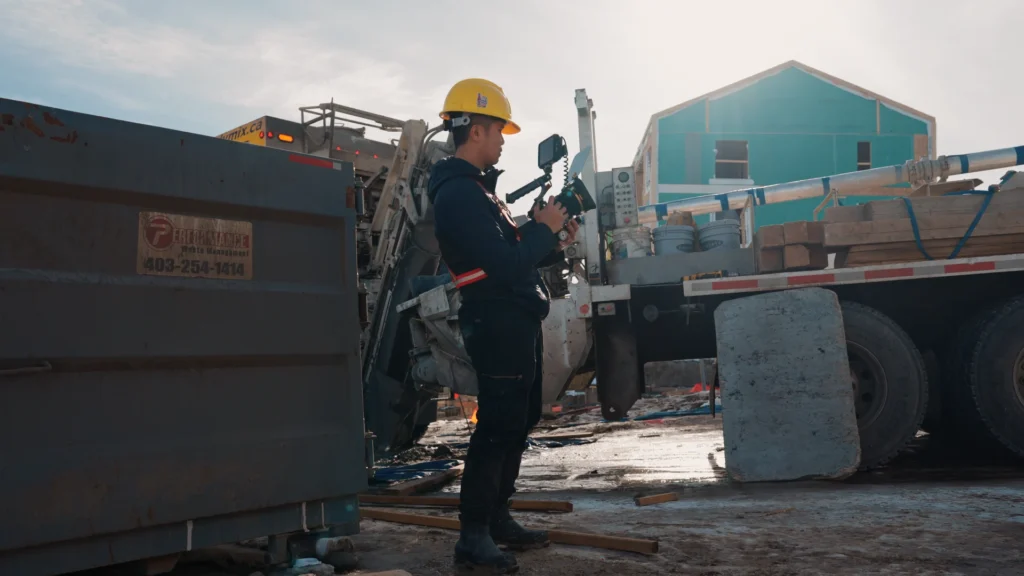
This post is for the construction owner and the nonprofit leader who both have something a content mill will never have — a superintendent who lived the incident, an executive director who ran the program that worked — and have never understood that the lived account itself is now the most cited thing in search.
1. Name the Problem: Your Best Content Is Losing to Sources That Can Prove They Were There
Here is the problem most businesses haven’t named yet, and naming it correctly is the start of the fix. You are competing for AI citations against a web that is filling, fast, with competent, fluent, generic content — and in March 2026, Google changed the rules in a way that should terrify the generic and reward you specifically, if you understand what you’re sitting on.
The change, documented across the 2026 E-E-A-T coverage:
Google’s March 2026 core update “amplified the first E in E-E-A-T beyond all previous signals, with Experience now being the primary E-E-A-T differentiator.” — Digital Applied, 2026
E-E-A-T stands for Experience, Expertise, Authoritativeness, Trustworthiness. For years the last three did the heavy lifting, and the first “E” — Experience — was a quiet add-on. The March 2026 update flipped that. Experience — has the author actually done the thing they’re writing about — became the primary differentiator. And the consequence for AI search is stark:
96% of AI Overview citations come from sources with strong E-E-A-T signals. — Digital Applied, 2026
Read those two findings together. Experience is now the leading E-E-A-T signal, and 96% of what AI cites has strong E-E-A-T. That means demonstrated, first-hand experience is now functionally a gate on getting cited at all. Content that reads like it was written by someone who has never been on a jobsite, never run a youth program, never lived the thing — competent as it may be — is on the wrong side of that gate.
This is a Problem-Aware post in Schwartz’s terms, and it follows Rule #44, Name-the-Problem: the one who names the problem owns the answer. The problem is not “we need more content.” The problem is that your content can’t prove it was there — and the machine now checks. The answer, it turns out, is the thing you’ve been able to do all along and never recognized as a search asset: put the person who was there on camera.
2. The One Thing AI Structurally Cannot Generate
Understand why Google made this move, because the why is the whole opportunity. It is not a stylistic preference. It is a structural defense against the flood.
An AI model is trained on the existing corpus of the web. It is extraordinarily good at synthesizing, rephrasing, and recombining what is already there. It can write a fluent, organized, plausible paragraph about almost anything. What it cannot do — by its very architecture — is produce genuine first-hand experience, because it has never had any. As the 2026 E-E-A-T analysis puts it:
“AI can synthesize information at scale, but it cannot produce genuine experience. By prioritizing experience signals, Google gives an edge to human-led, original content that goes beyond generic summaries.” — Digital Applied, 2026
This is the most important sentence in the post, so let me make it concrete. A model can write a perfectly competent paragraph about “the importance of cold-weather concrete practices.” It cannot generate the sentence “We lost a full pour in Fort McMurray in ’19 because we trusted the blanket cure for one degree too warm — now I check the mix temperature myself, every time, before the truck leaves.” That sentence requires a person who was standing there when the pour failed. It exists nowhere in the model’s training data because it never happened to anyone but the superintendent who said it.
The same is true on the nonprofit side. A model can write about “the value of early literacy intervention.” It cannot generate “The first kid we got reading at grade level was a nine-year-old who’d been told he was lazy for four years — and the day his mother cried in my office is the day I knew the program worked.” That is lived experience. It is unrepeatable. And it is now the most cited kind of content there is.
Google’s bet is simple and durable: as the web fills with synthetic content, the signal worth surfacing is the one synthesis can’t fake. First-hand experience is the new #1 ranking signal precisely because it’s the one thing the machine flooding the web cannot produce. And the only reliable way to capture first-hand experience at quality is to record a real person telling it — which is to say, an interview.
3. Information Gain: Why a Practitioner’s Quote Is Worth More Than Anything You Can Write
The E-E-A-T update has a deeper mechanism underneath it, and it predates 2026 by years: information gain. It is the concept that turns “first-hand experience” from a soft quality into a measurable ranking advantage.
Google holds a patent — US11354342B2, granted June 2022 — describing a system that scores how unique a piece of content is against the rest of the corpus. Content that merely repeats what’s already online has low information gain. Content that adds something genuinely new has high information gain, and the system is built to reward it. The application to first-hand experience is direct, and the SEO literature names it precisely:
“A unique quote from a practitioner is a unique string of text that does not exist anywhere else on the web and is a micro-unit of information gain that cannot be replicated by competitors or AI-generated content. Content that includes first-person verification is a trust signal for both Google and AI citation engines.” — Outpace SEO, 2026
Sit with the phrase “a unique string of text that does not exist anywhere else on the web.” That is the literal definition of what an AI engine is hungry for and a content mill cannot supply. When your superintendent describes the failed pour in his exact words, those words are a string of text that exists in exactly one place — your video’s transcript. A competitor cannot copy it without quoting you. An AI cannot generate it. It is pure information gain, attributable to a named human, on the record.
This reframes the economics of an interview completely. People think of a founder or expert interview as “content production.” It is closer to information-gain manufacturing. Every clean, specific, first-hand sentence you capture is a micro-unit of the one thing the algorithm rewards most and the rest of the web can’t produce. A blog writer trying to compete has to phone an expert and hope for a usable line. Storimatic walks in with a camera and a question list engineered to extract exactly those lines, on the record, attributable, in HD — which is the subject of the companion piece below.
4. The Information-Gain Asset Is Already in Your Building
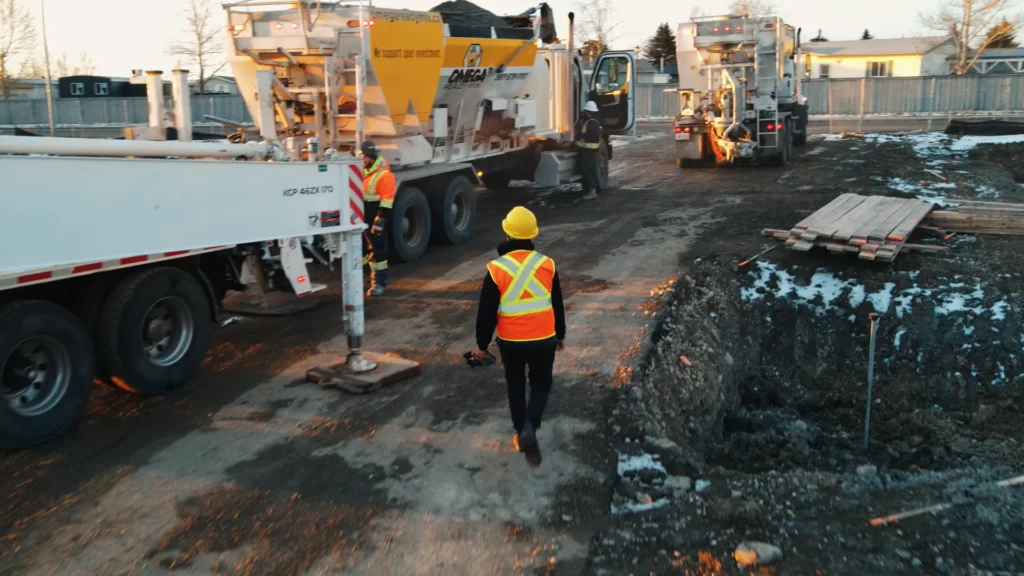
Here is the part that should land hardest for the construction owner and the nonprofit leader, because it costs you nothing to acquire — you already own it.
The single biggest differentiator for content performance in 2026, per the E-E-A-T research, is “proprietary data, first-hand research, and unique insights that AI tools cannot generate from their training data” (Digital Applied, 2026). Most businesses read that and assume it means commissioning a study or building a data set. It doesn’t have to. The richest reserve of first-hand, proprietary, unrepeatable experience in your organization is the people who work there — and it’s currently locked in their heads.
For the construction owner, that reserve is enormous and entirely uncaptured:
- The superintendent who has personally run two hundred pours and knows the one thing that goes wrong in a Calgary winter.
- The foreman who can explain the call he made on a tight-tolerance install that saved the schedule.
- The owner who lost a bid that taught him exactly what proof a developer actually wants.
Every one of those is first-hand experience that exists nowhere in any model’s training data. It is information gain walking around your jobsite in steel-toes. Uncaptured, it’s worth nothing to search. Captured on camera, transcribed, and published, it becomes the most cited kind of content there is.
For the nonprofit leader, the reserve is just as rich and even more emotionally resonant:
- The executive director who can describe, specifically, the program that worked and the kid it worked on.
- The program manager who lived the moment a model would call “impact” and she calls by the child’s name.
- The frontline staff who know what actually changes a life because they watched it change.
A nonprofit’s deepest asset for AI visibility is not a polished mission statement — the machine discounts those as low-information-gain boilerplate every organization writes. It is the lived, specific account of the work, told by the person who did it. That account is unrepeatable, attributable, and exactly what Google’s experience-first update now surfaces.
The job, in both cases, is not to create first-hand experience. You have a surplus of it. The job is to capture it before it walks out the door — and capturing lived experience at quality, from a real person, is precisely what an interview does.
5. Google Is Now Actively Pulling First-Hand Experience Into Its Answers
This isn’t a passive ranking adjustment you hope to benefit from someday. Google is actively reaching for first-hand accounts and putting them into its AI summaries right now.
As of May 2026, Google began “expanding AI search summaries with first-hand experiences” — explicitly surfacing lived accounts inside the AI Overview answers buyers and donors and program officers see (Android Headlines, May 2026, via Digital Applied). The engine is not just allowing experience-rich content to rank. It is seeking it out to populate the answer box.
Combine that with the OtterlyAI 2026 finding that AI reads video transcripts and cites them regardless of view count, and the picture for a video studio’s clients is direct: a captured first-hand account — your superintendent’s failed-pour story, your ED’s first-kid-reading story — sitting in a clean transcript on a long-form video is exactly the raw material Google is now reaching into answers to find. The lived account, captured and transcribed, is positioned to be lifted straight into the summary a buyer reads when they ask the machine who to trust.
The window here matters. Google announced the direction; the web has not yet caught up with first-hand-experience content because most organizations don’t know how to produce it at scale and assume it’s hard. It isn’t hard — it’s an interview. The organizations that capture their people’s lived experience now, while the supply is thin and the demand is being written into the algorithm, get cited disproportionately. This is the early-mover window on the exact signal Google just declared most important.
6. Customer-as-Hero: The Story Structure That Makes Experience Citable
Capturing first-hand experience is necessary but not sufficient. A rambling, unstructured account doesn’t yield citable passages. The discipline that turns lived experience into liftable, cited content is Storimatic’s Customer-as-Hero framework — and it does double duty here.
Customer-as-Hero structures every story around a clear protagonist (a named human), a clear problem (what they faced), and a clear outcome (what happened). That structure is persuasive — it’s why a film lands emotionally. But it is also extractable, which is why its transcript gets cited. Each beat becomes a self-contained unit with a clear subject and a clear claim — exactly what an AI engine lifts.
Walk it through the construction case. Customer-as-Hero forces the superintendent’s story into a citable shape:
- Protagonist (named entity): “I’m the site superintendent on the [named project].”
- Problem (the query a buyer would ask): “Pouring a foundation in a Calgary February is where most jobs go wrong.”
- First-hand experience (the information gain): “We lost a pour in ’19 trusting the blanket cure — now I check the mix temperature myself before every truck leaves.”
- Outcome (the proof): “We haven’t lost a cold-weather pour since.”
That sequence is four citable chunks, each attributable to a named person describing what they lived. It reads as a story to a human and as four high-E-E-A-T, high-information-gain passages to the machine. The nonprofit version runs identically — protagonist (the ED), problem (kids told they were lazy), first-hand experience (the day the mother cried), outcome (a program that demonstrably works).
The story discipline that makes the film move is the same discipline that makes its transcript citable. Customer-as-Hero isn’t decoration over the experience — it’s the structure that makes lived experience legible to both the viewer’s heart and the engine’s chunker. We capture the experience in this shape on purpose, because shapeless experience doesn’t get cited and structured experience does.
7. Rule #50: The Slop Penalty Is the Other Side of the Same Coin
Everything above is the upside of first-hand experience. Rule #50, the Slop Penalty, is the downside that makes the upside urgent — and it’s the trap most organizations are about to walk into.
The Slop Penalty holds that AI-generated, generic content doesn’t just fail to help — it actively triggers detection and retroactively discounts the trust you’d built. Google’s stated position through 2026 is consistent: it doesn’t penalize content for being AI-generated; it penalizes content for being generic and unoriginal. The two often coincide, because most organizations prompt a model, publish the output unedited, and ship the same low-information-gain paragraph everyone else shipped.
Here is the trap. A construction company or nonprofit, told it needs “more content for AI visibility,” reaches for the cheapest path: generate it. The result is fluent, generic, zero-information-gain text — exactly the content the March 2026 update demotes and the Slop Penalty discounts. They spend a budget making their visibility worse, because they produced more of the thing the algorithm is now built to skip.
The escape from the Slop Penalty is the exact thing this whole post is about: first-hand experience is the one form of content that is structurally un-sloppy. It cannot be generated. It cannot be generic, because it’s specific to one person’s lived account. It is, by definition, high information gain. A real superintendent’s failed-pour story is the precise opposite of slop — and it’s the thing a model flooding the web cannot produce.
So the two findings clamp together into one instruction. The Slop Penalty (Rule #50) says generic AI content actively hurts you. The March 2026 update says first-hand experience is now the top signal. The only content that satisfies both — escapes the penalty and clears the experience gate — is captured lived experience from a real, named human. Which is an interview. There is no cheaper, faster, generate-it path that works. The path that works runs through a camera pointed at someone who was there.
8. Construction and Nonprofit: Two Verticals, the Same Unfakeable Asset
The first-hand-experience advantage shows up most powerfully in exactly the two verticals where the lived account is richest and the stakes are highest — and where, not coincidentally, the buyer is most explicitly evaluating trust.
Construction (the lead vertical). When a developer’s project manager asks AI to shortlist contractors, the engine surfaces sources with strong E-E-A-T — and Experience is now the leading E. A contractor whose online presence is generic “quality and service” copy has no experience signal. A contractor with a superintendent on camera describing the specific, lived particulars of how the work actually gets done has the strongest experience signal available. The first-hand account is also the proof that wins the bid in the room — the buyer can see the craftsmanship and the judgment, told by the person who has it. Captured experience clears the AI’s E-E-A-T gate and the procurement officer’s trust test at once.
Nonprofit and education. When a program officer or major donor asks AI which organizations do credible work in a cause area, the engine surfaces sources with demonstrated experience of real outcomes. A nonprofit with a mission statement and a logo has boilerplate the machine discounts. A nonprofit with its executive director and frontline staff describing, by name and in specifics, the program that worked and the lives it changed has unrepeatable first-hand experience — the highest-information-gain content there is. And it solves the nonprofit’s particular need for board-defensibility: when the board asks why the organization should appear when a major donor searches, “we captured the real, first-hand account of our impact and it’s the kind of content Google now surfaces above all else” is a defensible answer. The lived account is the win they didn’t have to manufacture — they just had to capture what was already true.
Across both, the structure is identical: the organization is sitting on a surplus of the exact asset Google made most valuable in March 2026, locked in the heads of the people who lived it, and an interview is the way to get it out.
9. The 5 Counter-Intuitive Truths
- The AI flood made human experience more valuable, not less. Google’s response to synthetic content was to elevate the one signal synthesis can’t fake. The more AI content floods the web, the more a real first-hand account is worth.
- Your most valuable AI-visibility asset is a person, not a page. First-hand experience lives in your superintendent’s and your ED’s heads, not on your website. Uncaptured, it’s worth nothing to search; captured, it’s the most cited content there is.
- A mission statement is low-information-gain boilerplate. The polished “about us” copy every organization writes is exactly what the March 2026 update demotes. The specific, named, lived account is what gets surfaced.
- Generating more content can make your visibility worse. The Slop Penalty discounts generic AI output, and the experience update demotes it. More slop is negative ROI. The only content that clears both is captured lived experience.
- The thing you can’t fake is the thing you already own. You don’t need to commission research or build a data set. The first-hand experience Google now rewards most is walking around your jobsite and sitting in your program office. You just have to capture it before it leaves.
10. FAQ
What changed with Google’s March 2026 core update?
The update “amplified the first E in E-E-A-T beyond all previous signals,” making first-hand Experience the primary differentiator (Digital Applied, 2026). For years, Expertise, Authoritativeness, and Trustworthiness did most of the work; now whether the author has actually done the thing they’re describing is the leading signal. Because 96% of AI Overview citations come from strong-E-E-A-T sources, demonstrated first-hand experience is now functionally a gate on getting cited at all.
Why can’t AI just generate first-hand experience?
Because by its architecture it has never had any. A model synthesizes the existing web; it cannot produce a genuine lived account, because that account exists nowhere in its training data — it happened to one specific person. “AI can synthesize information at scale, but it cannot produce genuine experience” (Digital Applied, 2026). A real superintendent’s account of a specific failed pour is a unique string of text that doesn’t exist anywhere else — pure information gain a competitor can’t copy and a model can’t fabricate.
What is information gain and why does it matter for AI citation?
Information gain is how unique your content is against everything else online — the subject of Google’s patent US11354342B2. Content that repeats what’s already published has low information gain; content that adds something genuinely new is rewarded. “A unique quote from a practitioner is a unique string of text that does not exist anywhere else on the web” (Outpace SEO, 2026) — which makes a captured first-hand account the purest, highest-value form of information gain available, and exactly what AI engines reach for.
We don’t have proprietary data or research. Can we still compete?
Yes — you almost certainly have a large reserve of first-hand experience without realizing it. The 2026 differentiator is “proprietary data, first-hand research, and unique insights AI cannot generate” — and unique first-hand insight is exactly what your superintendent, foreman, executive director, or frontline staff carry in their heads. You don’t have to commission a study. You have to capture the lived experience already inside your organization, on camera, before it walks out the door.
Will publishing more AI-generated content help our rankings?
Usually the opposite. Google demotes generic, unoriginal content (often AI-generated, because most people publish prompts unedited), and the Slop Penalty means that content can retroactively discount the trust you’d built. Combined with the experience-first update, generic AI output is negative ROI for visibility. The content that clears both the Slop Penalty and the experience gate is captured first-hand experience from a named human — which can’t be generated, generic, or faked.
How does an interview produce content Google will cite?
An interview captures lived experience directly from the person who has it, in their own words, attributable to them by name — the exact high-Experience, high-information-gain signal the March 2026 update rewards and Google is now actively pulling into AI summaries. Structured through the Customer-as-Hero framework (named protagonist → real problem → first-hand account → outcome) and delivered as a chaptered, cleanly-transcribed video, that captured experience becomes a set of citable passages a model can lift straight into an answer.
Is this just for construction companies?
No. It’s strongest in construction and nonprofit/education because those organizations sit on the richest reserves of lived experience and their buyers explicitly evaluate trust — a contractor’s superintendent, a nonprofit’s executive director. But the principle is universal: across every category, Google now rewards demonstrated first-hand experience over generic content, and the only way to capture lived experience at quality is to record a real person describing what they actually did.
11. The Take-Home
For years, the advice was to write more, write better, write comprehensively. In March 2026, Google changed what “better” means. It made the first “E” in E-E-A-T — Experience, has the author actually lived this — the primary signal, and tied 96% of AI citations to strong E-E-A-T. The web is filling with fluent, competent, generic content that an AI can produce in seconds, and Google’s answer was to elevate the one thing that AI, by its nature, cannot produce: a real person describing what they actually went through.
That is the best news a construction owner or a nonprofit leader has had from a search algorithm in a decade — because you are sitting on a surplus of exactly that. The superintendent who lived the failed pour. The executive director who watched the program work on a real child. Those are unrepeatable, unfakeable, high-information-gain first-hand accounts, and they are now the most cited kind of content there is. Uncaptured, they’re worth nothing to search. Captured on camera, structured, and transcribed, they’re the asset the algorithm reaches for.
You cannot prompt that asset out of a model. You cannot write it from the outside. You can only capture it from a human who lived it — which is an interview, and which is the one thing a content mill will never be able to do and you can do tomorrow.
First-hand experience is the new #1 ranking signal. You can’t fake it on camera — and you don’t have to, because you already have it. We just point the camera at it.
12. About the Author
Jared Ho is the founder of Storimatic Studio (Calgary video production), the founder of Biostack (AI-visibility / GEO-AEO agency), and the owner of the Omega Group of companies (Omega Ready Mix · Omega 2000 Cribbing · Omega Precast — Edmonton). The first-hand experience in this post is not borrowed. Jared runs real concrete businesses, has lived the lost bids and the cold-weather pours his superintendents could describe on camera, and has watched a five-person Edmonton precast operator — sitting on decades of uncaptured lived expertise — go from invisible to Top-3-cited in Alberta AI search by capturing exactly that experience (Recommendation Rate 0% → 66% over nine months). Storimatic is the only video studio framing the interview as captured first-hand experience and the highest-information-gain content there is — because it’s the only one run by an operator who has the lived experience, runs the studio that captures it, and runs the AI-visibility agency that proves it gets cited.
13. Book a Discovery Call
Want to know what first-hand experience your organization is sitting on — and how to capture it before the people who lived it move on? Book a 30-minute discovery call. We’ll run your category’s top buyer (or donor) questions through ChatGPT, Perplexity, Gemini, and Google AI Mode, show you whether your name comes back, and map the single interview-led shoot day that would capture the lived experience Google now rewards above every other signal.
he Asset Is Already in Your Building
Most organizations think they need more content.
What they actually need is a better way to capture the expertise they already have.
If you’re sitting on decades of experience but struggle to turn it into content that earns trust, rankings, and AI citations, please book a call with Storimatic Studio today!
Sources
Primary anchor data:
- Digital Applied — E-E-A-T in March 2026: Google Rewards Experience (Experience as primary differentiator; 96% of AI Overview citations from strong-E-E-A-T sources; “AI cannot produce genuine experience”; Google expanding AI summaries with first-hand experiences)
- Outpace SEO — What Is Information Gain in SEO (a practitioner’s quote as a unique string / micro-unit of information gain)
- Search Engine Land — What Is Information Gain (Google patent US11354342B2)
Video as the capture mechanism:
- OtterlyAI — YouTube Citation Study 2026 (AI reads transcripts; cites regardless of view count)
- AmICited — YouTube transcripts drive AI citations
- Search Engine Land — Social and UGC: the trust engines powering search everywhere
Last updated: May 2026 | Methodology: Digital Applied 2026 E-E-A-T analysis (the source for the March 2026 Experience-first update, the 96% figure, and Google’s expansion of AI summaries with first-hand experiences); Outpace SEO / Search Engine Land on the information-gain patent (US11354342B2); OtterlyAI 2026 on transcript-based video citation; synthesized with the 92 Rules + Customer-as-Hero + AOD interview craft + verified Omega Group construction experience. The attribution to one specific March 2026 update is perishable; the durable thesis — first-hand experience is the one signal AI cannot generate, and it is now the most-rewarded one — is the load-bearing claim.
GEO/AEO Schema Markup Notes (for publisher)
- Article schema —
author= Jared Ho (Person),publisher= Storimatic Studio,datePublished= “2026-05-20”,mentions= [Google, E-E-A-T, Digital Applied, Outpace SEO, OtterlyAI, ChatGPT, Perplexity, Google AI Mode] - FAQPage schema — wrap Section 10 with FAQPage structured data; each answer is self-contained and front-loaded for extraction
- VideoObject schema — every embedded interview video gets full VideoObject markup with transcript, chapters/Clip, uploadDate, and a 300+ word description — the captured first-hand account must be machine-readable to be lifted into AI summaries
- DefinedTerm schema — “E-E-A-T” · “Experience (first E)” · “information gain” · “the Slop Penalty” · “Customer-as-Hero” · “first-hand experience”
- Statistic / Claim schema — every quantitative claim (96% of AI Overview citations from strong-E-E-A-T sources; March 2026 update; patent US11354342B2) with QuantitativeValue + citation attribution
- Speakable schema — TL;DR, the experience-first finding (Section 1), the “AI cannot generate experience” mechanic (Section 2), the information-gain definition (Section 3), the take-home (Section 11)
- Internal linking — link to the 92 Rules (#50, #44), Customer-as-Hero (S-1), and the S-3 companion (“The Unrepeatable Sentence”)
Cross-platform distribution plan (eat our own dog food):
- storimatic.ca/blog — primary publish with full schema; embed a chaptered, transcribed interview clip of a real Omega operator delivering an unrepeatable first-hand account, so the post about captured experience is captured experience
- YouTube long-form — 13-min “First-hand experience is the new #1 ranking signal” with Jared on camera, plus a captured first-hand account from an Omega superintendent, chaptered at: the problem / what AI can’t generate / information gain / the asset in your building / Google pulling experience into answers / Customer-as-Hero / the Slop Penalty — human-reviewed transcript, 334+ word description
- YouTube chapters as citation surfaces — each chapter named for the question it answers, so the video is cited across multiple chapters
- LinkedIn (Jared’s personal profile) — native long-form article + 4 clips cut from the long-form (the “AI can’t fake experience” reframe, the information-gain practitioner-quote idea, the “asset in your building” point, the Slop-Penalty trap) — and one clip that is a real first-hand account, demonstrating the thesis
- Reddit — answer-seed for r/Construction, r/nonprofit, r/SEO: “Google’s March 2026 update made first-hand experience the top signal — here’s what that means if you actually do the work”
- Email — the Section 11 take-home as a standalone send, split for the construction list and the nonprofit list with vertical-specific opening scenes
Quarterly refresh:
- Q3 2026: re-verify the E-E-A-T / Experience figures and whether Google has issued a further core update changing the weighting (the attribution to the March 2026 update is the most perishable element)
- Q4 2026: add a verified Storimatic client result — a captured first-hand-experience interview that was demonstrably lifted into an AI Overview or cited in an AI answer
- Q1 2027: re-confirm the information-gain patent framing and the “Google expanding AI summaries with first-hand experiences” rollout status as the feature matures

Written by
Jared Ho
Founder of Storimatic Studio in Calgary. Construction video production specialist with 750+ projects and 20M+ views generated for clients. Owner of Omega Ready Mix. Drone-licensed and on-site every shoot.
Ready to turn this into a video that wins business?
View Storimatic Video Services →

