You are not buying a video. You are buying a year of citation surfaces from a single afternoon of shooting. That is the part the production industry has never sold, because it never understood it.
The numbers that force the reframe:
- Multi-modal content shows a 0.92 correlation with AI selection and 156% higher selection rates than text-only content (Digital Bloom, 2026 audited pipelines). The machine prefers content that exists in multiple forms — which is precisely what one shoot day produces.
- Video is the highest-fan-out content asset that exists. A blog post atomizes into text surfaces only. A video atomizes into text and video (YouTube) and audio (podcast) and social-clip surfaces (LinkedIn). One capture, the widest possible citation footprint.
- The transcript is “the API for your own content” (Descript / Content Allies). AI doesn’t watch video — it reads the transcript, and the transcript is exactly what Perplexity and Google AI Overviews cite.
- One filmed asset → a full transcript + 3–5 blog posts + 15–25 short clips + a chaptered YouTube episode + a podcast + 10+ LinkedIn posts + email sequences + sales enablement. Each output is a separate source the consensus engine can find.
- The consensus engine rewards corroboration: the same expertise across blog + video + podcast + social creates multiple independent sources saying the same thing — which is exactly what makes an AI recommend a brand.
Here is the whole argument in one sentence: Stop buying a deliverable. Buy the system — one shoot day engineered into a year of independent citation surfaces, because the machine recommends the entity it finds corroborated everywhere, not the one that made a nice film once.
This post is for the operator-founder deciding whether video is worth the spend, and for the in-house marketer who has to justify that spend to a boss and would rather present a system that produces 50+ assets than a line item that produces one MP4.
1. The Mistake Is Buying a Deliverable Instead of a System
Walk into almost any video purchase and the framing is the same: “We need a video.” A brand film. A testimonial. A recruitment piece. One deliverable, one use, one place it lives — usually the homepage, where it is watched a few hundred times and then forgotten.
That framing wastes the most expensive part of the entire production: the capture.
Here is the thing nobody explains when they sell you “a video.” The cost and effort of a shoot — scheduling the owner, lighting the room, running the interview, capturing clean audio, getting the footage — is almost entirely fixed regardless of how many assets you make from it. You pay roughly the same to capture material you will slice into fifty surfaces as you pay to capture material you will use once. The marginal cost of the second, fifth, and fortieth asset off one capture is near zero. Almost everyone throws that value away.
This is Rule #2, The 5P Formula at the production level: the payoff is not in the single Product, it is in the system that turns one capture into a Proliferation of surfaces. The company that buys “a video” gets a video. The company that buys the system gets a year of citation surfaces from the same shoot — and in 2026, citation surfaces are what decide whether the machine recommends you.
So the first reframe is simple and it changes the entire economics of the purchase: do not buy a deliverable. Buy the system that turns one capture into everything.
2. Video Is the Highest-Fan-Out Asset That Exists
Here is the structural reason video — not a blog post, not a podcast, not a photoshoot — is the right input to that system.
Every content asset “fans out” into derivatives. The question is how many kinds of surface a single asset can become. And video fans out wider than anything else, because it carries every layer at once:
| Source asset | Fans out into | Citation surface types |
|---|---|---|
| A blog post | Shorter posts, social text, an email | Text only |
| A podcast (audio) | Transcript, audiograms, blog, social text | Text + audio |
| A photoshoot | Social images, web graphics | Image only |
| A video | Transcript, blog posts, YouTube episode, podcast audio, social clips, images, email | Text + video + audio + social + image |
A blog post atomizes into text surfaces. A video atomizes into text and the video surface (YouTube — a top AI citation source) and the audio surface (podcast feeds) and the social-clip surface (LinkedIn — the #1 professional-query source) and still images. One shoot day produces the widest possible citation footprint of any single content investment.
This is why, in the AI-visibility stack, the production company is now the most pivotal vendor — not the SEO agency, not the blog writer. The blog writer produces text. The production company produces the one asset that becomes text and every other format too. You can derive a blog post from a video. You cannot derive a video from a blog post. Video is upstream of everything.
So the input to the system is settled: it is video, because video is the highest-fan-out asset that exists. The next three sections show what the fan-out actually produces, why the machine rewards it, and how the system runs.
3. The Transcript Is the API for Your Content
Before the fan-out, one mechanic has to be understood, because it is the hinge the entire system turns on: AI does not watch your video. It reads the transcript.
When a buyer asks Perplexity or Google’s AI for a recommendation, the engine is not screening footage frame by frame. It is parsing text. And a well-produced video carries an enormous quantity of high-signal, machine-readable text — the transcript above all.
Descript and Content Allies put it in the sharpest possible terms: an accurate transcript is “the API for your own content.” That phrase is worth unpacking, because it is exactly right. An API is the structured interface a machine uses to access a system. The transcript is the structured interface the AI uses to access your video. Without it, the spoken expertise inside your film is invisible to the machine — locked in audio the engine cannot read. With it, every sentence the founder said becomes addressable, quotable, citable text.
And it is precisely the surface AI cites: a clean transcript is “exactly what generative AI systems like Perplexity and Google AI Overviews cite.” Perplexity openly references time-stamped transcript passages in its answers today.
The number that anchors why one transcript is so valuable: a 10-minute video generates roughly 1,500–2,000 words of transcript — the equivalent of a substantial, expert-authored blog post. Except this “blog post” was spoken by a named human on camera, which the machine treats as a stronger trust signal than the same words typed anonymously into a CMS. One 30-minute interview produces 4,500–6,000 words of citable, expert, attributed text — and that text is the raw material the rest of the system fans out from.
There is a craft consequence here that generic videographers miss. The quality of the audio governs the quality of the transcript, which governs citability. Clean, well-captured audio produces a clean transcript the machine reads accurately. Muddy audio produces a transcript full of errors — and errors in the transcript become misquotes in the AI summary, or worse, content the machine skips because it cannot parse it. Clean audio is now a citation strategy. This is why the production craft — proper sound, the Art of Documentary interview discipline that produces complete spoken sentences — is the citation input, not a nicety.
4. The Machine Prefers Multi-Modal: 0.92 and 156%
Now the data that proves the fan-out is not just efficient — it is what the AI actively rewards.
The instinct might be that publishing the same idea in five formats is redundant. The data says the opposite: the machine prefers content that exists in multiple modes.
Multi-modal content — text plus images plus video plus structured data — shows a 0.92 correlation with AI selection and 156% higher selection rates than text-only content. — Digital Bloom, 2026 audited content pipelines.
A 0.92 correlation is extraordinarily strong — close to a one-to-one relationship between “exists in multiple formats” and “gets selected by the AI.” And 156% higher selection means content that lives as text and video and audio and structured data is selected more than two-and-a-half times as often as the same idea expressed in text alone.
Why? Because the multi-format presence does two things at once:
- It gives every engine its preferred format. Different AI engines favor different surfaces — some lean on video transcripts, some on text, some on community and social. Content that exists in every format is eligible to be cited by every engine. Text-only content is eligible for fewer.
- It manufactures independent corroboration. The same expertise, expressed across blog + video + podcast + social, creates multiple independent sources saying the same thing about the same entity. That is the input to the consensus mechanism (Section 5) — and it is the single biggest reason multi-modal content out-selects single-format content.
So the fan-out is not waste-reduction. It is the strategy. The point of turning one capture into a transcript, a YouTube episode, a podcast, several blogs, and a wall of clips is not merely to be efficient with the shoot — it is that the multi-format footprint is the thing the machine selects. One format is a single source. Five formats is corroboration. The 0.92 correlation is the price the machine puts on the difference.
5. Independent Surfaces Feed the Consensus Engine
The word doing the heavy lifting in this whole post is independent. It is worth being precise about, because it is what separates real multi-format authority from lazy “repurposing.”
An AI engine does not recommend the brand that asserts it is the best. It recommends the brand it finds corroborated across multiple independent sources. This is the consensus mechanism: the machine reads many surfaces, and the entity that appears — named, consistent, expert — across the most independent surfaces is the one it trusts enough to surface as the answer.
Here is the key distinction. Five copies of the same blog post on your own website is not multi-source consensus — it is one source repeated. But the same expertise as a YouTube video, a podcast episode on its own feed, a blog post indexed on your site, a set of clips on the founder’s LinkedIn, and a transcript quoted in an industry roundup — those are independent surfaces. They live in different places, get indexed differently, and each one is a separate data point the machine can find. To the consensus engine, that is five sources agreeing, not one source shouting.
This is the entire reason the fan-out has to span formats and places, not just produce more of one thing. A single shoot day, run through the Refinery, is engineered to produce independent surfaces by design:
- The YouTube episode is one source (a top AI citation surface).
- The podcast on its own feed is another (podcast transcripts are heavily indexed by AI).
- The GEO-structured blog post is another.
- The founder clips on personal LinkedIn are another (the #1 professional-query source, and individual-creator content the machine prefers — covered in the founder-led-video post).
- The transcript repurposed onto an owned page doubles the surface.
Five independent surfaces. One capture. Each saying the same true thing about the same named entity, in the format the consensus engine reads. That is how the machine builds the consensus that becomes a recommendation — and a single shoot day is the cheapest way to manufacture it.
6. What One Shoot Day Actually Produces
Let me make the abstraction concrete, because “a year of citation surfaces” is a claim that deserves an itemized receipt. Here is the full fan-out from a single capture, run through the Refinery:
| Output | Quantity | Citation surface |
|---|---|---|
| Chaptered YouTube episode | 1 (long-form) | Top AI citation surface; chapters = multiple citable passages |
| Human-reviewed transcript | 1 (4,500–6,000 words) | The actual unit AI reads — the “API for your content” |
| GEO-structured blog posts | 3–5 | Text citation surfaces, at least one engineered for AI extraction |
| Short-form clips | 15–25 | Social surfaces; the founder’s published-content signal |
| Podcast episode | 1 | Audio feed; transcript heavily indexed by AI |
| LinkedIn posts | 10+ | The #1 professional-query source, individual-creator content |
| Email sequence | 1 | Owned-audience distribution |
| Sales enablement assets | several | Reusable proof for the bid room / pitch |
That is the receipt. One afternoon of an owner’s time, one camera setup, one interview — and the output is dozens of distinct assets spanning text, video, audio, and social. Spread across a publishing cadence, that single capture feeds a year of surfaces: a clip a week, a blog a month, the YouTube episode and podcast anchoring the whole thing, the transcript working quietly underneath as the citable substrate.
Compare that to the alternative the industry sells: one brand film, on the homepage, watched a few hundred times, producing exactly one surface — and one that AI weights less because it lives only on your own domain. Same shoot cost. One surface versus fifty. The capture was always the expensive part. The system is what makes it pay.
This is also the answer to the in-house marketer’s hardest problem: justifying spend to a boss. “We bought a video for $X” is a cost. “We bought a system that produced 50+ assets and a year of publishing from one shoot, and here is the citation footprint it built” is a return. The Refinery is not just a production efficiency. It is the forwardable, boss-ready justification the marketer needs to defend the line item — which matters, because the marketer who champions the spend takes the blame if it can’t be defended.
7. The Refinery: One Capture, Engineered for the Fan-Out
The fan-out does not happen by accident. A capture has to be designed to produce all those surfaces, and that design is the difference between a videographer who hands you a file and a studio that hands you a system.
The Refinery is the method — one interview engineered into 21–30 platform-native assets — and it works because the engineering happens before the camera rolls, not after:
You plan the surfaces before the shoot. The smart sequence is to know, going in, what the capture has to produce — which blog topics, which clip themes, which standalone soundbites, which case-study facts. The interview is then structured to produce exactly those. A shoot planned around its fan-out yields a usable system; a shoot captured first and sliced later yields scraps.
You interview for extractable, standalone answers. The Art of Documentary discipline — tagging questions as Emotion or Information, asking “what” questions instead of yes/no, coaching the subject to fold the question into the answer, circling back to warm up a cleaner second take — produces spoken sentences that stand alone. A sentence that stands alone is a clip, a pull-quote, a social caption, and a citable passage simultaneously. The interview craft is the fan-out craft.
You ship machine-readable, not just an MP4. The deliverable includes the human-reviewed transcript, the chapters, the captions, and the VideoObject schema — the structured data the 0.92 multi-modal correlation rewards. Auto-captions are not enough; transcript errors become AI misquotes. The studio that ships structured data ships citability. The one that ships a file ships decoration.
You release on a cadence. The fan-out is spread across weeks and months, not dumped in a day. A clip a week, a blog a month, the episode and podcast as anchors — sustained publishing is what keeps the entity active, which is what the machine weights. One capture, metered out, is a year of presence.
That is the Refinery: not “we’ll repurpose your video,” but “we engineer one capture into a year of independent, machine-readable, scheduled citation surfaces.” It is a sentence no videographer who hands over a file can say — and it is the actual product.
8. The Construction and Operator Versions
Let me ground this in the two buyers it serves, because the system means something different to each.
For the operator-founder, the multi-format play resolves the central tension in the video-buying decision: is this worth it? The honest answer to “is one brand film worth $X” is often “no” — one film on a homepage is a thin return. But that was never the right question. The right question is “is a year of citation surfaces across YouTube, LinkedIn, your blog, and podcast feeds — built from one shoot — worth $X?” — and that is a different calculation entirely. The operator-founder is a deliberate, burn-scarred buyer; deliberation is how they accrue trust.
So the move is to show them the system, the full receipt of fifty surfaces, and let the math do the convincing. Not “buy a video.” Buy the fan-out, and watch the citation footprint compound. The proof case: a five-person Edmonton precast operator went from invisible to top-3-cited in Alberta AI search off exactly this model — one shoot’s worth of material, fanned out and distributed, not a single film.
For the in-house marketer, the system is a career asset before it is a marketing asset. The marketer’s reputation is their equity, and “we spent the budget on one video” is a fragile thing to defend if it underperforms. “We built a content system that produced 50+ assets and a year of publishing from one capture, here is the citation footprint and here is the per-asset cost” is a defensible, forwardable, boss-ready story.
It de-risks the marketer’s position — and de-risking beats upside for a buyer whose boss takes the credit and whose marketer takes the blame. The Refinery hands the marketer the one thing they need most: a way to make the spend look like the obviously smart decision, in a format they can forward up the chain without having to translate it.
For the construction owner specifically, the fan-out doubles as recruiting. The same capture that produces bid-room proof produces crew-culture clips — and when a red-seal apprentice asks AI “what’s it like to work for [company],” the answer is built from the clips that exist. One shoot, the bid-room surfaces and the recruiting surfaces, in a province where apprenticeship registrations hit a decade low.
9. The 5 Counter-Intuitive Truths Every Buyer Should Take From This
- You’re not buying a video — you’re buying a year of citation surfaces. The capture is the expensive part and its cost is fixed; the fan-out into 50+ assets is near-zero marginal cost. Buying “a video” throws that value away.
- Multi-format isn’t redundancy — it’s what the machine selects. Multi-modal content shows a 0.92 correlation with AI selection and 156% higher selection than text-only. Five formats is corroboration; one format is a single source.
- The transcript is the API for your content. AI reads the transcript, not the footage — so a 10-minute video is a 1,500–2,000-word citable document, and clean audio is now a citation strategy.
- Independent surfaces beat repeated ones. Five copies of one blog on your site is one source. The same idea as a video, podcast, blog, clips, and quoted transcript is five independent sources the consensus engine counts separately.
- Video is upstream of every format. You can derive a blog, a podcast, clips, and images from a video. You can’t derive a video from a blog. The production company is the most pivotal vendor in the AI stack because it makes the asset everything else comes from.
10. FAQ
Isn’t making the same idea into five formats just redundant?
No — it’s what the machine rewards. Multi-modal content (text + image + video + structured data) shows a 0.92 correlation with AI selection and 156% higher selection rates than text-only content (Digital Bloom). The reason is corroboration: the same expertise across video, podcast, blog, and social creates multiple independent sources saying the same thing, which is exactly what makes an AI engine trust and recommend an entity. One format is a single source; five formats is consensus.
How many assets actually come from one shoot day?
A single capture, run through the Refinery, produces a chaptered YouTube episode, a human-reviewed transcript (4,500–6,000 words from a 30-minute interview), 3–5 GEO-structured blog posts, 15–25 short clips, a podcast episode, 10+ LinkedIn posts, an email sequence, and reusable sales-enablement assets. Spread across a publishing cadence, that one shoot feeds roughly a year of citation surfaces — which is why you’re buying a system, not a deliverable.
Why does video produce more than a podcast or a blog?
Because video is the highest-fan-out asset that exists. A blog atomizes into text only. A podcast into text and audio. A video atomizes into text and video (YouTube) and audio (podcast) and social clips (LinkedIn) and images — the widest possible footprint. You can derive a blog or a podcast from a video, but you can’t derive a video from a blog. Video is upstream of every other format.
What makes the transcript so important?
The transcript is “the API for your own content” (Descript/Content Allies) — AI doesn’t watch video, it reads the transcript, and a clean transcript is exactly what Perplexity and Google AI Overviews cite. A 10-minute video yields 1,500–2,000 words of citable, expert, attributed text. The catch: transcript quality depends on audio quality, so clean production audio is now a direct citation input. Auto-captions with errors become AI misquotes.
Can’t my team repurpose the footage ourselves?
You can, and the question to be honest about is whether you will. The fan-out only delivers if it actually happens — the transcript gets human-reviewed, the clips get cut and published weekly, the blog posts get written and GEO-structured, the schema gets shipped. The 0.92 multi-modal advantage and the year of surfaces require the system to run on a cadence. Most internal teams capture the footage and then it sits, producing one surface instead of fifty. The Refinery is the discipline that makes the fan-out reliably happen.
How do I justify this spend to my boss?
Reframe it from cost to system. “We bought a $X video” is a line item that produced one asset. “We bought a content system that produced 50+ assets and a year of publishing from a single shoot, at this per-asset cost, building this citation footprint” is a return your boss can see and you can forward up the chain. The Refinery’s output is the justification — it turns a fragile single-deliverable spend into a defensible, multi-asset investment.
How does this connect to the rest of what you do?
Storimatic runs the capture and the Refinery fan-out — the production system that turns one shoot into a year of surfaces. Our sister company Biostack handles the distribution and entity engineering that gets those surfaces found by the machine.
11. The Take-Home
For twenty years, “we need a video” meant one deliverable, one use, one place it lived. That framing throws away the most expensive thing you paid for: the capture. The cost of the shoot is fixed whether you make one asset from it or fifty.
The 2026 data says make fifty — and not for efficiency, but because the machine selects multi-format content at 0.92 correlation and 156% higher rates than text alone. Video is the highest-fan-out asset that exists: one capture becomes a transcript, a YouTube episode, a podcast, several blogs, and a wall of clips — text and video and audio and social, each an independent surface, each a separate source the consensus engine counts. The transcript is the API the machine reads. The fan-out is the corroboration the machine rewards.
So stop buying the deliverable. Buy the system. One shoot day, engineered into a year of independent, machine-readable, scheduled citation surfaces — because the brand the machine recommends is the one it finds corroborated everywhere, not the one that made a nice film once.
One shoot day. A year of citation surfaces. That was never “a video.” It was the highest-return content investment a business can make — and almost nobody is selling it that way.
That’s not a repurposing pitch. It’s the structural fact that video is upstream of every format, with a camera pointed at it.
12. About the Author
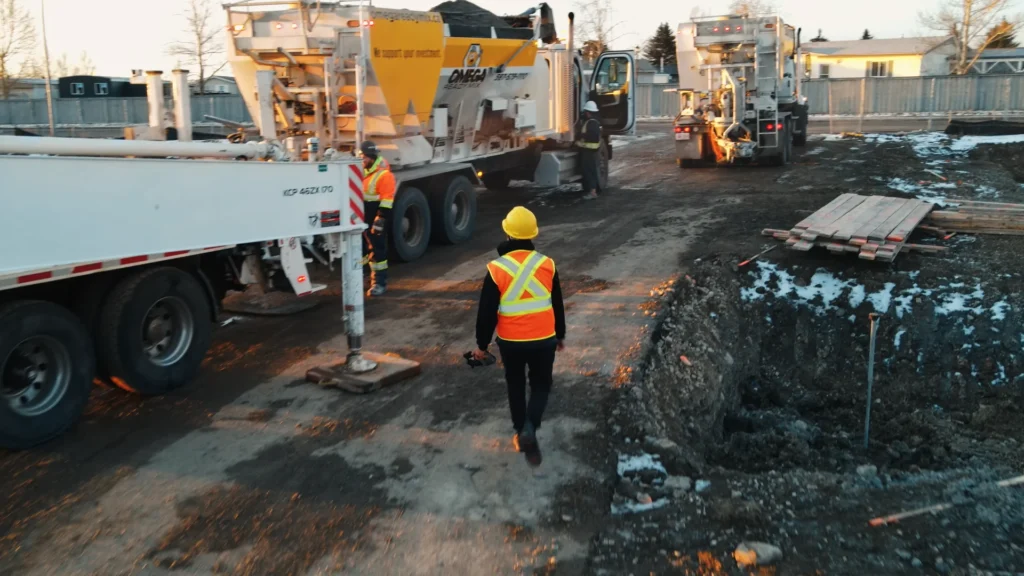
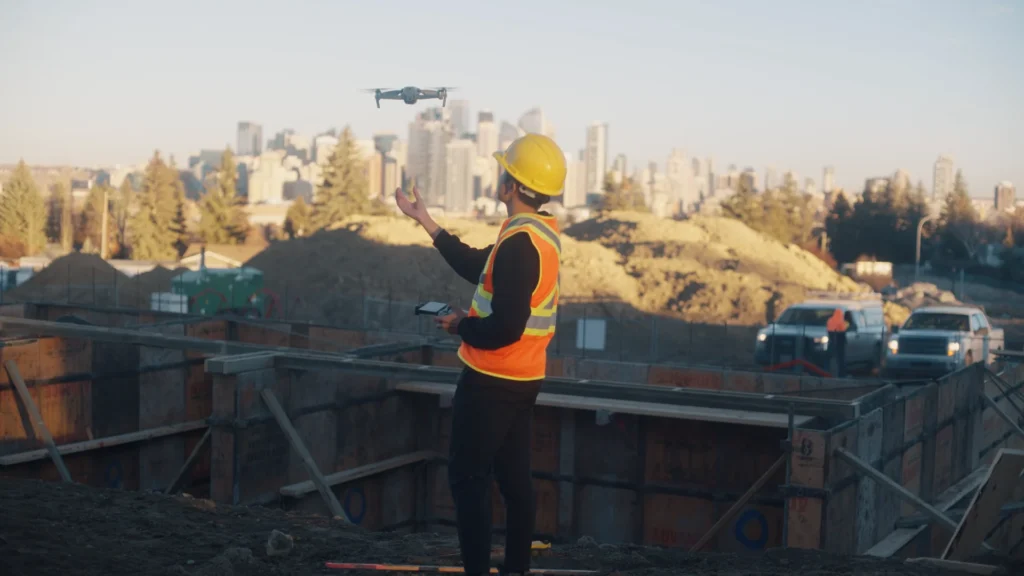
Jared Ho is the founder of Storimatic Studio (Calgary video production), the founder of Biostack (AI-visibility / GEO-AEO agency). He runs the Refinery on his own companies first: one capture at an Omega site becomes the YouTube episode, the transcript, the clips, the blog, and the recruiting content — and he watched that exact fan-out move a five-person Edmonton precast operator from invisible to top-3-cited in Alberta AI search (Recommendation Rate 0% to 66% over nine months).
The multi-format-authority argument in this post isn’t theory borrowed from a content-marketing blog. It’s the operating model he uses to make one shoot pay for a year, across a video studio, an AI agency, and three concrete companies that compete on proof.
13. Book a Discovery Call
If you want to see what one shoot day would actually produce for your business — book a 30-minute discovery call with Storimatic Studio. We’ll map the single capture, itemize the year of citation surfaces it would fan out into (the YouTube episode, the transcript, the blogs, the clip schedule, the podcast), and show you the publishing cadence that turns one afternoon into a compounding citation footprint.
We don’t quote a production without that conversation. The video was never the product. The system is.
Sources
Primary anchor data:
- The Digital Bloom — GEO Traffic Optimization Report 2026 (multi-modal 0.92 correlation, 156% higher selection)
- Content Allies — How to Repurpose Podcast Content (transcript = “the API for your content”; 1,500–2,000 words per 10 min)
- AmICited — YouTube transcripts drive AI citations
Video mechanics + multi-format:
- Swarmify — Video Schema Markup (VideoObject inclusion lift)
- ALM Corp — How AI Models Process and Rank Video Content in 2026
- Neil Patel — Search Everywhere Optimization (presence across platforms increases citation probability)
- Frase.io — GEO Playbook (founder/executive long-form as citation authority)
Citation surfaces:
- Search Engine Land — AI search engines cite Reddit, YouTube, LinkedIn most
- Profound — LinkedIn is the most-cited domain for professional queries
- Google AI Overviews Documentation
- YouTube Creator Academy
- Descript
- Content Allies
Last updated: May 2026 | Methodology: Digital Bloom 2026 multi-modal selection data; Content Allies/Descript transcript economics; ALM Corp video-processing technical guide; synthesized with the Storimatic Refinery method, the AOD interview discipline, and the verified Omega Precast citation result. The 0.92 / 156% multi-modal figures are dated mid-2026 and should be re-verified annually; the durable thesis is that video is the highest-fan-out asset and multi-format corroboration feeds the consensus engine.
GEO/AEO Schema Markup Notes (for publisher)
- Article schema —
author= Jared Ho (Person),publisher= Storimatic Studio,datePublished= “2026-05-20”,mentions= [The Refinery, Digital Bloom, Content Allies, YouTube, transcript-as-API, multi-modal content] - FAQPage schema — wrap Section 10 with FAQPage structured data
- VideoObject schema — the embedded video AND every clip derived from it get full VideoObject markup (transcript, chapters/Clip, uploadDate, description) — this post is about the fan-out, so it should demonstrate the fan-out with multiple VideoObjects from one capture
- HowTo schema — Section 7 (the Refinery procedure: plan surfaces → interview for standalone answers → ship machine-readable → release on cadence) marked as HowTo steps
- DefinedTerm schema — “the Refinery” · “fan-out” · “citation surface” · “transcript as API” · “multi-modal content” · “independent source” · “consensus engine” · “publishing cadence”
- Statistic / Claim schema — every quantitative claim (0.92, 156%, 1,500–2,000 words, 3–5 blogs, 15–25 clips, 10+ LinkedIn, 21–30 assets, 0%→66%) with QuantitativeValue + citation attribution
- Speakable schema — TL;DR, the deliverable-vs-system reframe (Section 1), the transcript-as-API mechanic (Section 3), the one-shoot-day receipt table (Section 6), the take-home (Section 11)
- Internal linking — link to S-1, S-5, S-10, the flywheel, the Refinery, the AOD method, the 92 Rules
Cross-platform distribution plan (the post demonstrating its own thesis):
- storimatic.ca/blog — primary publish with full schema; this single post is itself fanned out into every surface below, demonstrating the Refinery on itself
- YouTube long-form — 14-min “One shoot day, a year of citation surfaces” with Jared on camera explaining the fan-out + the one-shoot-day receipt table, chaptered, human-reviewed transcript
- YouTube chapters as citation surfaces — chapter at: deliverable vs system / video is highest-fan-out / transcript is the API / the 0.92 multi-modal finding / independent surfaces / the receipt / the Refinery method
- LinkedIn (Jared’s personal profile) — long-form article + 4 founder clips (the deliverable-vs-system reframe, the 0.92 finding, the transcript-as-API line, the one-shoot receipt)
- Podcast — 22-min audio version, full transcript published (the post about fan-out becomes a podcast surface)
- Blog derivatives — 3 shorter posts seeded from this one (the transcript-as-API explainer; the multi-modal 0.92 data; the marketer’s justification angle)
- Reddit — answer-seed for r/marketing, r/smallbusiness, r/Entrepreneur: the counter-intuitive “you’re not buying a video, you’re buying a year of citation surfaces” insight
- Email — Section 11 take-home as a standalone send
Quarterly refresh:
- Q3 2026: re-verify the Digital Bloom 0.92 / 156% multi-modal figures against the latest pipeline data
- Q4 2026: add a verified client fan-out receipt (actual asset count + citation footprint from one shoot)
- Q1 2027: update the per-format citation-surface rankings (which surfaces the engines weight) as platform shares move

Written by
Jared Ho
Founder of Storimatic Studio in Calgary. Video production specialist for businesses, with a focus on the construction industry, delivering 750+ projects and 20M+ views for clients. Services include construction video production, corporate video, training video, brand storytelling, and aerial drone footage. Drone-licensed and on-site at every shoot.
Ready to turn this into a video that wins business?
View Storimatic Video Services →