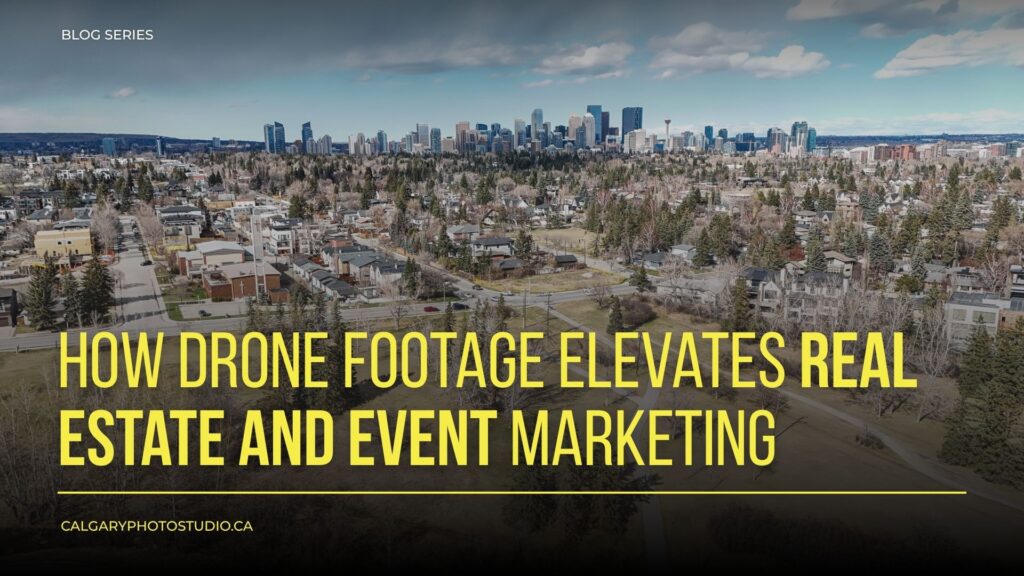
Whether you’re capturing the transformation of a Beltline development site for your portfolio or trying to get that perfect, smooth shot of a new McKenzie Towne home, drone videography is the key to standout content.
But between Calgary’s unique airspace, unpredictable Chinook winds, and strict privacy laws, flying here isn’t as simple as unboxing a drone and taking off.
This guide will walk you through the essential, actionable best practices to get stunning footage while staying safe, legal, and respectful of our community. Drawing on years of local experience, this is the playbook we use at Storimatic for every project across Alberta.

Legal Requirements and Drone Licensing in Canada
Before you even think about camera settings, the law is your first and most important checkpoint. Operating a drone commercially for real estate, construction progress, or marketing videos in Calgary requires specific certifications from Transport Canada. This isn’t just red tape—it’s designed to keep people, property, and other aircraft safe.
Flying without the proper license can result in fines starting at $1,000 and going up to $15,000 for corporations. More importantly, it can invalidate your insurance and put your entire project at risk.
Transport Canada Regulations and Certifications
All drone operations in Canada fall under the Canadian Aviation Regulations (CARs). For pilots, this means you must pass a written exam to earn a Pilot Certificate – Basic or Advanced Operations. The certificate is tied to your drone’s registration number, which you must display on the aircraft.
You must also carry proof of your certificate and drone registration during every flight. The regulations cover everything from maximum altitudes and distances from bystanders to where you can and cannot fly.
Bottom line: your drone flight’s legality is the foundation of every professional project.
Basic vs. Advanced Drone Pilot Licenses
The type of license you need depends entirely on where you plan to fly. The Basic Operations certificate allows you to fly in uncontrolled airspace, far from airports, and at a safe distance from people. This might work for a rural property shoot near Chestermere.
However, for most work in and around Calgary—especially near built-up areas, airports, or crowds—you’ll need an Advanced Operations certificate. This allows flight in controlled airspace (like near the Calgary International Airport) and closer to people, but requires a detailed site survey and flight plan for each location.
If your shot list includes anything near downtown, a school, or a hospital, the Advanced license is non-negotiable.
Flight Checklists, Logs, and Permissions
Professional pilots don’t wing it. Before every flight, you must conduct a pre-flight check of your equipment, batteries, and the immediate environment. You also need to review a site-specific risk assessment if flying under Advanced Operations.
Keeping a detailed flight log isn’t just good practice; it’s a regulatory requirement for Advanced pilots. This log proves you’re operating within the rules and is crucial for insurance purposes. Finally, always get written permission from property owners before flying over private land, even if you’re legally allowed in the airspace above it.
Where to Fly Drones in Calgary
Calgary’s airspace is a complex tapestry of controlled zones, bylaws, and no-fly areas. Knowing where you can legally and safely operate is half the battle of planning a successful shoot. What looks like an open field on a map might be restricted airspace or a protected wildlife area.
A great starting point is the official Nav Canada Drone Site Selection tool, but local knowledge fills in the critical gaps.
Sound familiar? Navigating these rules is where local experience pays off.
Before flying, always check restricted zones using the official NAV Canada drone site selection tool, which provides real-time airspace data across Calgary.
Controlled Airspace and No-Fly Zones
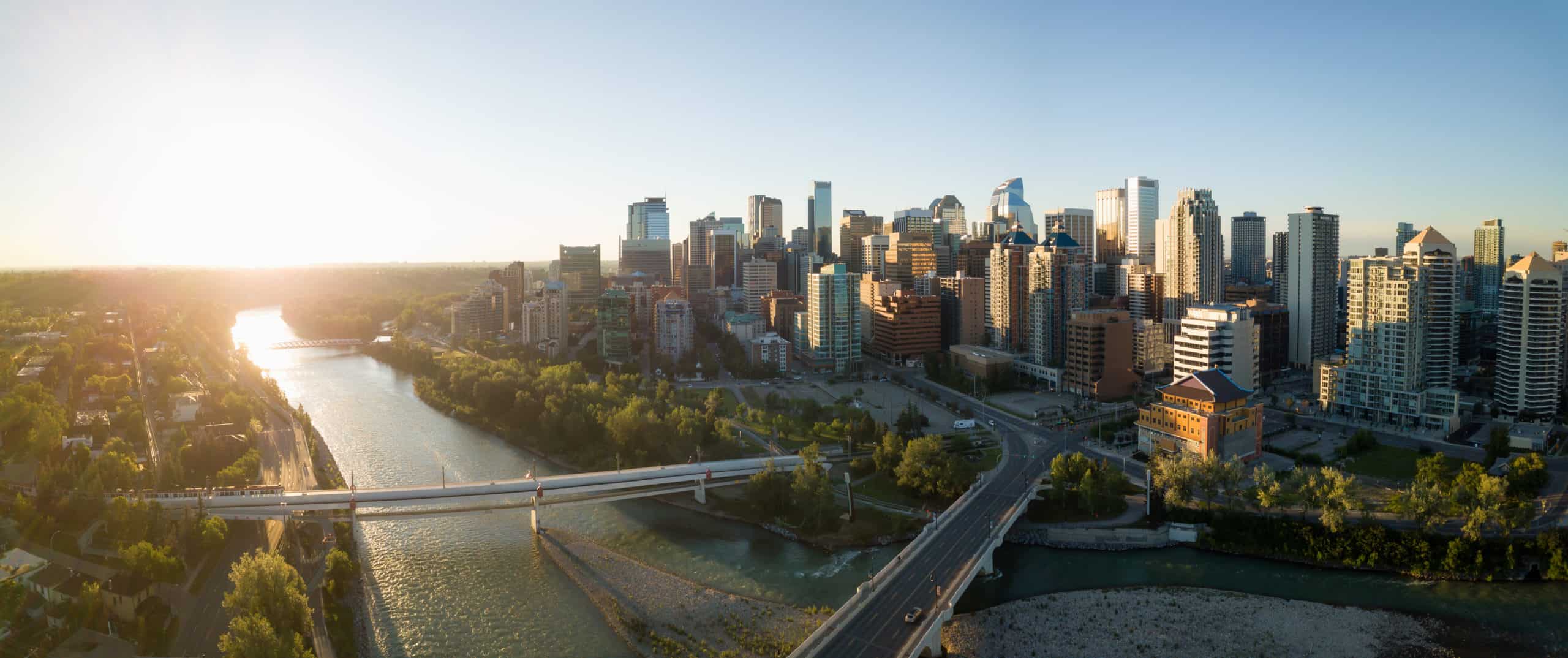
The most significant restriction is controlled airspace around airports and heliports. A large ring of controlled airspace surrounds the Calgary International Airport (YYC), extending surprisingly far into communities like Skyview Ranch and Redstone. Similarly, the Calgary/Springbank Airport (YBW) and the downtown hospitals’ helipads have their own restrictions.
You cannot fly in these zones without explicit permission from NAV Canada, which requires an Advanced license and a detailed plan submitted through a drone flight request portal. Flying in these zones without permission is a severe violation.
Parks, Pathways, and City Bylaws
Even if the national airspace rules allow it, the City of Calgary has its own bylaws. Generally, you cannot take off, land, or operate a drone from within a City of Calgary park without a permit. This includes popular spots like Prince’s Island Park, Nose Hill Park, and the extensive pathway system along the Bow River.
These bylaws are primarily for public safety and privacy. For a shoot in a community park in a neighbourhood like Bridgeland, you’d need to secure a location permit from the City, which adds another layer of planning to your timeline.
Flying Near Schools, Hospitals, and Crowded Areas
Flying near these sensitive locations is heavily restricted. You must never fly over or within 30 meters of people who aren’t part of your operation unless you have an Advanced certificate and have mitigated the risk. This automatically rules out flying directly over schoolyards during recess, busy pedestrian zones like Stephen Avenue Walk, or crowded festivals.
The rule is about minimizing risk to the public. Even with an Advanced license, flying in these areas requires extreme caution, planning, and often coordination with event or property management.
Downtown Calgary and Film Permits
Capturing the iconic skyline is a common goal, but downtown presents the greatest challenges. The airspace is controlled due to proximity to the hospitals and heavy air traffic. Furthermore, flying for commercial filming often requires a separate film permit from the City of Calgary in addition to your airspace authorization.
This process can take weeks. A professional crew will plan this well in advance, often scouting for safe take-off/landing zones on private property with permission, rather than trying to launch from a public sidewalk.
Privacy and Environmental Considerations
Beyond the law, ethical drone operation is paramount. Your right to capture footage from the air doesn’t override someone’s right to privacy on the ground. Similarly, Calgary’s beautiful natural surroundings come with a responsibility to protect them.
Avoiding complaints and protecting your reputation starts with being a conscientious operator.
PIPEDA and Privacy Laws
Canada’s Personal Information Protection and Electronic Documents Act (PIPEDA) applies to drone footage. If your video captures identifiable individuals in a private setting where they have a reasonable expectation of privacy, you may need their consent. This is a grey area but erring on the side of caution is best.
For example, filming a backyard pool party from above without permission is a clear violation. When filming a property, be mindful of neighbouring yards and windows. Using narrower lenses and careful framing can help avoid intrusive shots.
Avoiding Wildlife Disruption and Sensitive Habitats
The noise and presence of a drone can stress wildlife. It is illegal to disturb animals, especially in provincial parks or protected areas like the Weaselhead Flats or Fish Creek Provincial Park. During certain times of year, such as bird nesting season, restrictions are even more stringent.
Always maintain a significant distance from any animals you encounter. If you notice an animal changing its behavior because of your drone—like a bird of prey taking flight or animals fleeing—you are too close and must land immediately.

Pre-Planning and Site Preparation
Professional footage is made on the ground before the drone ever leaves it. Rushing to a location and hoping for the best is a recipe for mediocre shots, missed opportunities, and safety hazards. A methodical pre-planning process separates amateur clips from cinematic content.
This phase is about eliminating surprises and ensuring every minute of flight time is productive and safe.
Location Scouting and Obstacle Checks
Whenever possible, visit the location in person before the shoot day. Look for overhead hazards like power lines, which are difficult to see on a drone’s camera and are a major collision risk. Note tall trees, light poles, and building eaves.
Identify a safe, clear take-off and landing zone that’s free of people, debris, and wind tunnels created by buildings. For a construction site in Quarry Park, this might mean coordinating with the site manager to cordon off a specific area.
Shot Lists, Storyboarding, and Flight Path Planning
Don’t just “get some aerials.” Create a specific shot list with the client or for your project. What story are you telling? Is it the grandeur of a new development in University District, or the precise progress of a foundation pour?
Sketch a simple storyboard or map out intended flight paths. This ensures you capture all necessary angles (establishing shot, revealing shot, top-down) efficiently. It also helps you visualize potential obstacles along each path before you’re in the air.
Regulatory Permits and Research
Based on your location scouting and shot list, confirm what regulatory approvals you need. Use the Nav Canada tool to check airspace classification. Do you need a City park permit? A film permit? An airspace authorization?
Get these applications in early, as approvals can take time. Also, check the weather forecast meticulously—Calgary weather can change rapidly, and high winds are a drone’s biggest enemy.
Drone Videography Best Practices: Camera Settings
With the legal and logistical groundwork laid, you can focus on capturing beautiful footage. Modern drones offer incredible cameras, but automatic settings often produce flat, unprofessional video. Taking manual control is essential for cinematic results that stand out.
Understanding a few key principles will dramatically improve the quality of your output, whether you’re filming a luxury home in Aspen Woods or a commercial site in the East Village.
That’s where moving from auto to manual makes all the difference.
ISO, Shutter Speed, Aperture, and White Balance
For the smoothest motion, follow the 180-degree shutter rule: set your shutter speed to 1/(double your frame rate). If shooting at 30fps, use 1/60s shutter. This creates natural motion blur. Keep your ISO as low as possible (usually 100) to avoid grainy footage.
Most drone lenses have a fixed aperture, so your main controls are shutter speed and ISO. Always set your white balance manually to a preset (Sunny, Cloudy) or a custom Kelvin temperature—don’t leave it on auto, which can cause colors to shift mid-shot.
Frame Rates for Cinematic and Smooth Footage
Frame rate choice affects the feel of your video. Use 24 or 30 frames per second (fps) for a standard, cinematic look. If you plan to create dramatic slow-motion in post-production, you need to shoot at a higher frame rate like 60fps or 120fps.
A key tip: shoot all your normal-speed footage at one consistent frame rate (e.g., 30fps) and only switch to a high frame rate for specific slow-motion shots. Mixing frame rates in a single edit can look jarring.
Flight Techniques and Modes
Smooth, intentional camera movement is the hallmark of professional drone videography. Jerky stops, starts, and pans will ruin otherwise perfect footage. Mastering both manual flight and your drone’s automated modes gives you a full creative toolkit.
It’s not about letting the drone do all the work; it’s about using technology to execute precise, repeatable movements that would be difficult manually.
Follow Me, Orbit, Waypoints, and Gimbal Use
Automated flight modes are powerful when used purposefully. Use “Orbit” or “Point of Interest” to smoothly circle a key feature, like a heritage building in Inglewood. “Waypoints” allow you to program a complex, repeatable flight path for multiple takes.
The “Follow Me” mode can be great for tracking a vehicle along a road. Regardless of the mode, always use slow, gentle stick inputs on the controller. And remember to program your gimbal tilt movement to be just as smooth as your flight path.
Smooth Flight Paths and Practice Drills
The best pilots practice specific maneuvers. Set up cones or markers in a safe, open field and practice flying precise squares, circles, and slow pulls backward. Practice coordinating a simultaneous ascent/descent with a gimbal tilt.
The goal is muscle memory. In high-pressure situations, like a single-chance shot with perfect lighting, you don’t want to be figuring out the controls. Smoothness is a practiced skill.
Safety Protocols and Best Practices
Safety is the non-negotiable thread that runs through every other best practice. A single lapse can lead to damaged equipment, injured people, legal trouble, and a ruined reputation. A professional pilot’s mindset is one of proactive risk management.
What are the non-negotiable safety rules you should never break, even for the perfect shot?

Visual Line of Sight and Bystander Distance
You must always keep your drone within unaided visual line of sight (VLOS). This means you can see it with your own eyes, without binoculars, to navigate and see other aircraft. In Calgary, with its many visual obstructions, this often means a much shorter practical range than your drone’s maximum.
You must also maintain a safe distance from bystanders. For Basic Operations, it’s 30 meters horizontally. For Advanced, you can fly closer only if you’ve mitigated the risk in your flight plan. Never fly directly over people.
Height Limits and Emergency Operations
The maximum legal altitude is 122 meters (400 feet) above ground level. In Calgary, this is especially important near the airport approach paths. Always respect this limit. Before flying, know your drone’s “Return-to-Home” (RTH) settings and have a plan for signal loss.
What will you do if a helicopter suddenly appears? Your immediate action should be to descend and land as quickly and safely as possible. Always yield to manned aircraft—they have the right of way, always.
Fines and Penalties for Violations
The consequences for breaking the rules are severe. Transport Canada can and does issue fines. For individuals, fines start at $1,000. For companies, like a real estate or construction firm, fines can be $5,000 to $15,000 per violation.
Beyond fines, you could be held liable for any property damage or personal injury. Your drone could be confiscated, and you could lose your pilot certificate.
Bottom line: there is no shot valuable enough to justify breaking safety regulations.
Improving Skills and Training
Drone videography is a craft that continually evolves. New technology, updated regulations, and creative techniques mean the learning never stops. Committing to ongoing skill development is what keeps your work competitive and your operations flawless.
Where should a Calgary-based pilot focus their training efforts after mastering the basics?
Practice, Drone Courses, and Different Drone Types
Dedicate regular time to pure practice, not just client work. Simulator software can be invaluable for practicing maneuvers in a risk-free environment during our long winters. Consider advanced courses in cinematography or specific editing software like DaVinci Resolve or Adobe Premiere Pro to polish your final product.
Finally, understand the strengths of different drone types. A heavy-lift cinema drone is overkill for a simple real estate tour but essential for a high-end commercial film with a dedicated camera. Match your tool to the job for the best results.
Frequently Asked Questions About Drone Videography in Calgary
Do I need a license to fly a drone for my own personal use in Calgary?
Yes, in almost all cases. If your drone weighs between 250 grams and 25 kilograms, you need at least a Basic Pilot Certificate, even for recreation. You must also register the drone with Transport Canada. The only exception is for micro-drones under 250g flown in very specific, low-risk scenarios.
Flying in your backyard in a community like Nolan Hill still requires this certification if your drone is over 250g. The rules apply nationwide, regardless of intent.
Can I fly my drone in a Calgary city park to take family photos?
Most likely not without a permit. City of Calgary bylaws generally prohibit taking off, landing, or operating drones within a municipal park. This includes large parks like Nose Hill and small neighbourhood parks.
You would need to apply for a permit from the City, which is typically granted for commercial or specific event filming, not general personal use. It’s best to find a location on private property with the owner’s permission.
How much does professional drone videography cost in Calgary?
Professional services from a licensed and insured operator like Storimatic typically start around $500 for a basic real estate package and can range to several thousand dollars for complex commercial projects requiring multiple days, advanced permits, and intricate editing. The price reflects the pilot’s expertise, insurance, equipment investment, and time spent on planning, flying, and post-production.
The cheapest option is rarely a good value, as it may indicate a lack of proper licensing, insurance, or professional-grade equipment, putting your project at risk.
What’s the biggest mistake new drone pilots make in Calgary?
The most common and serious mistake is not checking and understanding airspace restrictions. Many new pilots assume that if they’re away from the airport, they’re fine, but controlled airspace extends far beyond the runways.
Flying in restricted airspace near YYC without permission is a major violation. Always use an official tool like the Nav Canada drone site selection map or a certified app like NAV Drone before every single flight, no matter how familiar you are with the area.
Conclusion
Mastering drone videography in Calgary is about blending technical skill with rigorous respect for the rules and our community. From securing the right license to planning the perfect, safe shot over the Bow River, each best practice builds towards footage that is not only stunning but also responsibly created.
The sky offers an incredible perspective, but accessing it professionally requires groundwork. By following these guidelines, you protect your investment, your reputation, and the safety of everyone on the ground.
Ready to capture your property or project with professional, compliant, and cinematic aerial video? Storimatic brings over a decade of local expertise to every flight. Let’s discuss how we can bring your vision to life from the best vantage point in Calgary.

Written by
Jared Ho
Founder of Storimatic Studio in Calgary. Video production specialist for businesses, with a focus on the construction industry, delivering 150+ projects and 20M+ views for clients. Services include construction video production, corporate video, training video, brand storytelling, and aerial drone footage. Drone-licensed and on-site at every shoot.
Ready to turn this into a video that wins business?
View Calgary Construction Video Production →