
In today’s competitive Calgary market, attention is the most valuable currency. Businesses are fighting not only for visibility, but for trust, clarity, and credibility. Corporate video has become one of the most effective tools to achieve all three—but only when it’s done right. Many companies assume video production is as simple as showing up with a camera and pressing record. In reality, without a structured process, corporate videos often miss the mark, waste budget, and fail to deliver measurable results.
Key Takeaways
- The corporate video production process runs in five core stages from strategy to distribution.
- Success is made in pre-production planning, not just on filming day.
- Define goals and audience, plan thoroughly, film, edit, then distribute and optimize.
- A structured process protects budget and delivers measurable ROI in 2026.
This guide breaks down the corporate video production process for Calgary businesses step by step, showing exactly how professional video projects are planned, filmed, and delivered. Whether you’re a construction firm, professional service provider, or growing corporation, understanding this process will help you make better decisions—and get better results—from your video investment.

Why Corporate Video Matters for Calgary Businesses
Calgary is home to thousands of businesses competing across construction, energy, real estate, technology, and professional services. Decision-makers are busy, skeptical, and overloaded with information. Video cuts through that noise faster than text or static images.
According to a 2024 Wyzowl report, 91% of businesses use video as a marketing tool, and 87% say it delivers a positive return on investment. For Calgary businesses, corporate video is no longer optional—it’s a strategic asset.
- Builds trust by showing real people, real projects, and real results
- Explains complex services quickly and clearly
- Improves website conversion rates and engagement
- Supports sales, recruiting, and internal communications
A professionally produced corporate video signals credibility. Poorly executed video, on the other hand, can damage brand perception just as quickly.
For companies still evaluating whether video is worth the investment, this structured approach explains why Calgary businesses invest in corporate video production to build trust and drive long-term growth.
According to video marketing statistics from Wyzowl, video continues to deliver one of the highest ROI rates among digital marketing tools.
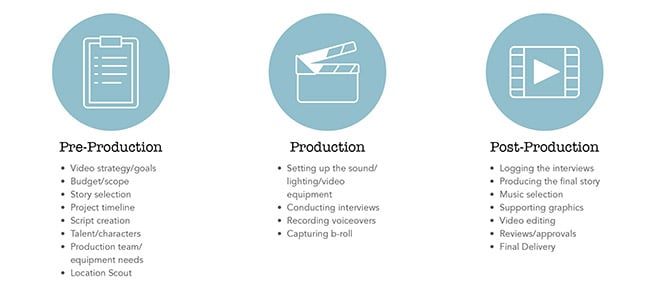
Overview of the Corporate Video Production Process
Professional corporate video production follows a proven framework designed to reduce risk, control costs, and maximize impact. While every project is unique, the core stages remain consistent.
- Strategy & Goal Definition
- Pre-Production Planning
- Production (Filming)
- Post-Production & Editing
- Distribution & Optimization
Skipping or rushing any of these steps often leads to unclear messaging, reshoots, or videos that simply don’t perform. At Storimatic Studio, this process ensures every video aligns with business goals—not just aesthetics.
Step 1 – Strategy & Goal Definition
The most successful corporate videos begin long before cameras are turned on. Strategy defines the “why” behind the video and shapes every decision that follows.
Understanding Business Objectives
A corporate video can serve many purposes, but trying to accomplish everything at once often results in a confusing message. Clear objectives keep the project focused.
- Brand awareness and positioning
- Lead generation and sales support
- Recruitment and employer branding
- Internal training or safety communication
For example, a Calgary construction company may prioritize credibility and scale, while a professional services firm may focus on trust and expertise.
Identifying the Target Audience
Who the video is for matters just as much as what it says. Executives, potential clients, job candidates, and investors all respond to different messaging styles.
Defining the audience helps determine tone, length, visuals, and even filming locations. A recruitment video feels very different from a client-facing brand film.
Choosing the Right Type of Corporate Video
Not all corporate videos serve the same function. Common formats include:
- Corporate brand overview videos
- Client testimonial videos
- Construction progress and project showcase videos
- Training and onboarding videos
Choosing the right format ensures the message lands effectively and delivers measurable value.

Step 2 – Pre-Production Planning (Where Success Is Made)
Pre-production is where most of the real work happens. This phase transforms strategy into a clear, executable plan—saving time, money, and stress during filming.
Concept Development & Creative Direction
This stage defines the story. What is the key message? How should the brand feel? What emotion should viewers walk away with?
A strong concept ensures consistency across visuals, interviews, and editing. Without it, videos often feel disjointed or generic.
Scriptwriting & Storyboarding
Some corporate videos rely on full scripts, while others use structured outlines—especially testimonial-driven projects. Either way, planning the narrative in advance prevents rambling and unclear messaging.
Storyboards or shot lists help visualize the final video, ensuring no critical footage is missed on filming day.
Script development is a critical part of pre-production, and learning how to write a powerful script for your corporate video helps ensure your message stays focused and effective.
Location Scouting & Logistics
Filming locations impact sound, lighting, safety, and overall production quality. For Calgary construction videos, this also includes site safety planning and coordination with on-site teams.
- Office environments
- Active job sites
- Warehouses or industrial facilities
Scheduling & Production Planning
Pre-production also sets timelines, crew size, and equipment needs. Efficient planning minimizes disruption to daily operations—especially important for busy corporate teams.
Step 3 – Production (Filming Day)
Production is where planning turns into reality. Because the groundwork has already been laid, filming days are focused, efficient, and controlled.
Professional Equipment & Crew
High-quality corporate video production relies on more than just cameras. Professional crews bring:
- Cinema-grade cameras for clean, sharp visuals
- Professional lighting to control mood and consistency
- Dedicated audio equipment for clear dialogue
- Specialty tools such as drones when appropriate
As filmmaker David Fincher famously noted, “Sound is half the picture.” Poor audio is one of the fastest ways to lose viewer trust.
Directing On-Camera Talent
Most executives and employees are not professional actors. A skilled director helps them feel comfortable, confident, and authentic on camera.
This guidance is especially important for testimonial videos, where genuine emotion and credibility matter more than perfect delivery.
Capturing B-Roll & Visual Storytelling
B-roll footage brings corporate videos to life. It provides visual context and keeps viewers engaged while reinforcing key messages.
- Teams at work
- Construction progress and craftsmanship
- Office culture and environment
Strong visual storytelling separates professional corporate videos from generic promotional content—and sets the foundation for effective editing in post-production.
Step 4 – Post-Production & Editing
Post-production is where all the raw footage comes together and transforms into a polished, professional corporate video. This stage is critical—it’s where storytelling, pacing, and brand identity are fully realized.
Video Editing & Narrative Structure
Editors begin by organizing footage, selecting the strongest takes, and shaping a clear narrative that aligns with the original strategy. A well-edited corporate video flows naturally, keeps attention, and delivers the message without feeling rushed or drawn out.
Professional editors focus on:
- Logical story progression
- Clean transitions and pacing
- Maintaining viewer engagement throughout
For example, testimonial videos often follow a problem–solution–outcome structure, while brand videos may lead with purpose and vision.
Color Grading & Sound Design
Color grading ensures visual consistency across shots and reinforces brand tone—whether that’s clean and corporate or bold and cinematic. Sound design balances dialogue, background music, and ambient audio for clarity and impact.
According to Adobe research, videos with clear audio and consistent visuals are perceived as 30% more trustworthy than poorly balanced productions.
Motion Graphics & Branding Elements
Motion graphics enhance clarity and professionalism without overpowering the message. Common elements include:
- Logo animations
- Lower-thirds for names and titles
- On-screen text to reinforce key points
When used strategically, these elements guide viewers and strengthen brand recall.
Review, Revisions & Final Approval
Professional video production includes structured review rounds. Clients provide feedback, adjustments are made, and final versions are delivered in formats optimized for their intended platforms.
Clear revision processes prevent endless edits and ensure timelines stay on track.
Step 5 – Distribution & Optimization
A great corporate video only delivers value if it’s seen. Distribution and optimization are often overlooked—but they determine real-world results.
Where Calgary Businesses Use Corporate Videos
Corporate videos can be deployed across multiple channels:
- Company websites and landing pages
- LinkedIn and social media platforms
- Sales presentations and proposals
- Trade shows and industry events
- Internal training portals
Each platform may require different aspect ratios, lengths, or edits to perform effectively.
Video SEO & Optimization Best Practices
Optimizing videos for search engines improves visibility and engagement. Best practices include:
- Keyword-rich video titles and descriptions
- Custom thumbnails
- Closed captions for accessibility
- Fast-loading video hosting solutions
Google increasingly prioritizes video content in search results, making optimization essential for Calgary businesses competing online.
Measuring Performance & ROI
Performance metrics help determine success and inform future content strategy. Common indicators include:
- Watch time and completion rate
- Click-through and conversion rates
- Audience retention
Data-driven insights ensure video remains a long-term asset—not a one-time expense.
Common Mistakes Calgary Businesses Make with Corporate Video
Even well-intentioned projects can fail due to avoidable mistakes. The most common include:
- Lack of clear strategy or goals
- Prioritizing visuals over messaging
- Poor audio quality
- Overly long or unfocused videos
- Choosing vendors based on price alone
Professional planning and experience help avoid these pitfalls and protect brand reputation.
Why Work with a Professional Video Production Company in Calgary
Professional video production isn’t just about equipment—it’s about experience, storytelling, and reliability. Working with a dedicated team provides:
- Strategic guidance from concept to distribution
- Consistent quality across all content
- Efficient workflows that respect your time
- Clear communication and accountability
For industries like construction or corporate services, professionalism on screen reflects professionalism in business.
Why Businesses Choose Storimatic Studio
Storimatic Studio works closely with Calgary businesses to produce corporate, testimonial, and construction videos that deliver measurable value. With a professional crew, modern equipment, and deep understanding of local industries, each project is handled end-to-end with precision and care.
Our experience working with real businesses—not staged scenarios—ensures every video feels authentic, credible, and aligned with business goals.
Frequently Asked Questions (FAQ)
How long does the corporate video production process take?
Most projects take between 3–6 weeks from strategy to final delivery, depending on scope and revisions.
How much does corporate video production cost in Calgary?
Costs vary based on complexity, crew size, and deliverables. Professional projects are typically priced as strategic investments rather than hourly services.
If budget planning is a concern, understanding the corporate video production cost in Calgary starts with knowing how each stage of the production process affects pricing.
Do we need a script before filming?
Not always. Some videos use full scripts, while others rely on guided interviews and outlines.
Can one video be used across multiple platforms?
Yes. Videos can be edited into multiple versions optimized for websites, social media, and presentations.
Final Thoughts
The corporate video production process is not about flashy visuals—it’s about clarity, trust, and results. For Calgary businesses, understanding this step-by-step framework ensures smarter decisions and stronger returns on investment.
When done professionally, corporate video becomes a long-term business asset that supports marketing, sales, recruitment, and brand growth.
Ready to Start Your Corporate Video?
If you’re planning a corporate, testimonial, or construction video in Calgary, working with a professional team makes all the difference.
Contact Storimatic Studio today to discuss your goals and discover how a structured video production process can elevate your brand and drive real results.