

The video industry is in the middle of its biggest transformation since the shift from analog to digital. Artificial intelligence is no longer a futuristic concept reserved for tech giants or Hollywood studios—it’s already shaping how everyday business videos are planned, filmed, edited, and distributed. From automated editing tools to AI-assisted cameras and data-driven content decisions, AI is changing the video industry faster than many professionals expected.
For businesses, this shift creates both opportunity and confusion. On one hand, AI promises faster production and lower costs. On the other, many companies worry that video quality, authenticity, and storytelling are being sacrificed for speed. This article breaks down what’s really happening, where AI adds value, where it falls short, and why professional video production still plays a critical role in a world powered by intelligent tools.

What Is AI in the Video Industry?
Defining AI Video Technology
Artificial intelligence in the video industry refers to software systems that can analyze data, recognize patterns, and make decisions or suggestions with minimal human input. In practical terms, this means AI can assist with tasks like cutting footage, improving audio, generating captions, optimizing thumbnails, or even drafting scripts.
Unlike traditional software, which follows fixed instructions, AI tools learn over time. By analyzing thousands—or millions—of videos, these systems identify what works and apply those insights automatically. This is why AI video tools often feel “smart”: they adapt, improve, and respond to real-world data.
A Brief Evolution of AI in Film and Media
AI didn’t suddenly appear in video production. Early versions showed up as simple automation features, such as basic color correction presets or motion tracking. Over the last decade, advancements in machine learning and computing power accelerated development dramatically.
Today, AI is deeply embedded across the video workflow. Editors use it to speed up rough cuts, marketers rely on it to test video performance, and training teams use it to scale learning content across large organizations. What started as a time-saving helper is now influencing creative and strategic decisions.
Many of the best AI video generators now extend beyond simple visuals, influencing how scripts, rough cuts, and concept videos are created during early production stages.
How AI Is Transforming Video Pre-Production
AI for Scriptwriting and Ideation
Pre-production has traditionally been one of the most time-consuming phases of video creation. Brainstorming concepts, outlining scripts, and aligning stakeholders can take weeks. AI tools now help accelerate this stage by generating script drafts, outlines, and even suggested talking points based on a project’s goals.
For example, a training video team can input the topic, audience, and learning objective, and receive a structured script outline in minutes. This doesn’t replace human creativity, but it provides a strong starting point—reducing blank-page anxiety and speeding up approvals.
- Faster concept validation
- More consistent messaging
- Reduced pre-production timelines
AI Storyboards and Previsualization
AI-powered visualization tools can quickly turn scripts into rough storyboards or visual references. These tools help clients and production teams align on framing, pacing, and visual style before a camera is ever turned on.
This is especially useful for corporate and training videos, where clarity matters more than cinematic flair. By resolving creative questions early, teams avoid costly revisions during filming.
Smarter Planning and Budget Forecasting
AI is also improving the business side of pre-production. Intelligent planning tools can analyze previous projects to predict timelines, crew requirements, and budget ranges. This helps production companies provide more accurate estimates and avoid unexpected overruns.
For clients, this means fewer surprises and clearer expectations—an important trust factor when investing in professional video production.
For internal communication and scalable training, AI avatar videos for business are increasingly used to deliver consistent messaging without requiring on-camera presenters.

AI’s Impact on Video Production and Filming
AI-Assisted Cameras and Smart Shooting
Modern cameras increasingly rely on AI to assist operators in real time. Features like face detection, auto-framing, intelligent focus, and exposure adjustments help ensure consistent image quality, even in fast-paced environments.
This is particularly valuable for interviews, training videos, and corporate communications, where technical errors can undermine credibility. AI doesn’t replace skilled camera operators, but it gives them tools to work more efficiently and confidently.
Virtual Production and AI-Generated Backgrounds
AI-driven virtual environments are changing how locations are used. Instead of renting physical spaces or building sets, teams can combine real footage with AI-enhanced backgrounds. This approach reduces costs and increases creative flexibility.
However, these tools work best when guided by experienced professionals. Poor lighting, mismatched perspectives, or low-quality assets can quickly reveal an artificial look—something audiences notice immediately.
Efficiency Gains on Set
By handling technical adjustments automatically, AI allows crews to focus more on performance, messaging, and storytelling. Shoots move faster, fewer takes are required, and overall consistency improves across scenes.
For businesses producing multiple videos—such as onboarding, safety, or training content—these efficiency gains can translate into significant long-term savings.
How AI Is Revolutionizing Video Editing and Post-Production
Automated Video Editing
Post-production is where AI is currently making the biggest impact. Automated editing tools can scan hours of footage, identify usable clips, and assemble rough cuts in a fraction of the time it once took.
This is especially useful for content-heavy projects like training libraries or internal communications. Editors can focus on refining the message rather than sorting through raw footage.
| Task | Traditional Editing | AI-Assisted Editing |
|---|---|---|
| Footage Review | Manual, time-intensive | Automated scene detection |
| Rough Cuts | Hours or days | Minutes or hours |
| Repetitive Tasks | Human-driven | Automated |
AI Color Correction and Visual Enhancement
AI-powered color tools can automatically balance exposure, correct white balance, and apply consistent looks across multiple clips. This is critical for brand consistency, especially when videos are shot in different locations or over long periods.
Upscaling and noise reduction tools also help extend the life of older footage, allowing businesses to repurpose existing assets instead of reshooting from scratch.
AI Audio Cleanup, Voice, and Subtitles
Clear audio is essential for professional video, particularly in training and instructional content. AI tools now remove background noise, balance voice levels, and generate accurate subtitles automatically.
Accessibility is another major benefit. Auto-captioning and translation features help organizations reach wider audiences and meet compliance standards, without dramatically increasing production costs.
AI in Video Marketing and Distribution
Personalized Video at Scale
One of the most powerful ways AI is changing the video industry is through personalization. Instead of creating a single generic video, businesses can now deliver tailored versions of the same content to different audiences. AI systems adjust visuals, text overlays, voiceovers, or calls to action based on viewer data such as location, role, or behavior.
This approach is especially effective for marketing campaigns, sales enablement, and internal communications. For example, a company can produce one core training video and use AI to personalize introductions or examples for different departments—without reshooting the entire video.
- Higher engagement rates
- More relevant messaging
- Better ROI from a single production
AI-Optimized Video for SEO and Advertising
AI tools now analyze large datasets to predict which video titles, thumbnails, and formats are most likely to perform well across platforms like YouTube, LinkedIn, and internal learning portals. This removes much of the guesswork from video marketing.
According to industry research, videos optimized with data-driven insights consistently outperform those based purely on intuition. AI doesn’t replace creative judgment, but it strengthens it by grounding decisions in real-world performance data.
Advanced Analytics and Performance Insights
Beyond views and watch time, AI-powered analytics reveal how viewers interact with video content—where attention drops, which segments are replayed, and what drives action. These insights allow teams to refine future videos and improve effectiveness over time.
For businesses investing in ongoing video programs, this feedback loop is invaluable. Video becomes a measurable, improvable asset rather than a one-off expense.
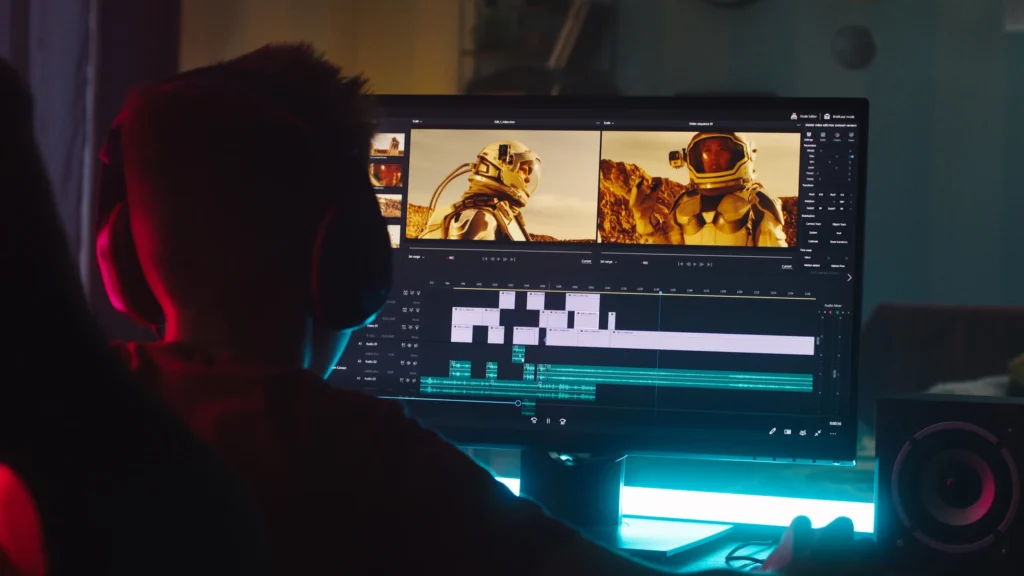
Ongoing research into AI adoption in media and entertainment shows that automation is accelerating workflows—but not replacing creative leadership.
AI and Training Video Production
Faster, Scalable Training Content
Training video production is one of the clearest winners in the AI-driven video landscape. Organizations need consistent, repeatable training content that can scale as teams grow. AI accelerates scripting, editing, and formatting, allowing companies to roll out training faster than ever before.
However, speed alone isn’t enough. Training videos must be clear, accurate, and engaging to be effective. This is where professional video production combined with AI tools delivers the best results.
Consistency and Knowledge Retention
AI helps standardize training delivery, ensuring every employee receives the same core information. This reduces misunderstandings, improves compliance, and strengthens organizational knowledge.
Studies in workplace learning consistently show that visual training improves retention compared to text-based materials. When AI-enhanced workflows are guided by instructional design best practices, learning outcomes improve significantly.
Why Professional Studios Still Matter
While AI tools make training video creation more accessible, they cannot replace human expertise in communication, pedagogy, and visual storytelling. Professional studios ensure that training videos are not only efficient to produce, but also effective in real-world use.
This combination—AI efficiency with professional oversight—is becoming the gold standard for modern training programs.
AI vs Traditional Video Production
What AI Does Better
AI excels at repetitive, time-consuming tasks. It speeds up workflows, reduces manual labor, and lowers production costs when used appropriately.
- Automating edits and captions
- Optimizing formats for multiple platforms
- Scaling content efficiently
What Humans Do Better
Storytelling, emotional nuance, and brand trust still depend on human judgment. Audiences quickly recognize when content feels generic or disconnected. Professionals bring context, empathy, and strategic thinking that AI cannot replicate.
The Hybrid Model: Best of Both Worlds
The most successful video teams don’t choose between AI and traditional production—they combine them. AI handles speed and scale, while professionals focus on strategy, creativity, and quality control.
This hybrid approach delivers faster turnarounds without compromising credibility or impact.

Challenges, Risks, and Ethical Concerns of AI Video
Authenticity and Trust
As AI-generated content becomes more common, authenticity becomes more valuable. Deepfakes and synthetic media raise legitimate concerns about misinformation and brand trust.
Businesses must be transparent about how AI is used and ensure that video content remains honest and representative.
Creative Saturation
Easy access to AI tools has led to an explosion of low-effort video content. Standing out now requires stronger ideas, clearer messaging, and higher production standards—not just faster tools.
Over-Reliance on Automation
AI is most effective when guided by experts. Without proper oversight, automated decisions can lead to generic messaging, technical errors, or misaligned brand communication.
The Future of the Video Industry with AI
Emerging Trends to Watch
Looking ahead, AI will continue to influence real-time video generation, interactive experiences, and intelligent content personalization. These innovations will reshape how audiences engage with video across industries.
How Businesses Should Prepare
The key to success is not adopting every new tool, but building a thoughtful strategy. Businesses that invest in both technology and professional expertise will be best positioned to adapt as the industry evolves.
How Storimatic Studio Uses AI the Right Way
AI-Enhanced, Human-Led Production
At Storimatic Studio, AI is used to enhance efficiency—not replace craftsmanship. Professional crews, modern equipment, and proven workflows are supported by intelligent tools that streamline production and post-production.
Practical Use Cases for Businesses
- Training and onboarding videos
- Corporate communications
- Marketing and brand storytelling
Why Clients Still Choose Professional Video
Quality, trust, and results matter. AI can accelerate production, but professional oversight ensures that every video reflects a brand’s values and objectives.
Frequently Asked Questions
Will AI replace video production companies?
No. AI automates tasks, but professional video production remains essential for strategy, storytelling, and brand trust.
Is AI video good enough for business training?
AI can support training video creation, but professional planning and execution are critical for clarity, accuracy, and engagement.
Can AI improve video SEO?
Yes. AI helps optimize titles, captions, thumbnails, and formats, improving discoverability and performance.
When should I hire a professional video studio instead of using AI tools?
When quality, credibility, and long-term brand value matter—especially for training, corporate communication, and customer-facing content.
Conclusion: AI Is Changing Video, Not Replacing Professionals
AI is undeniably changing the video industry—making production faster, more scalable, and more data-driven. But technology alone does not create meaningful communication. The future belongs to teams that blend AI’s efficiency with human creativity and strategic insight.
For businesses, the smartest move is partnering with professionals who understand both the tools and the craft of video storytelling.
Ready to create high-impact videos that combine AI innovation with professional quality? Contact Storimatic Studio to explore how our training video production and corporate video services can support your goals.


